
Should not entertain him, must be removed: Bhaichung Bhutia criticises AIFF president Kalyan Chaubey for corruption, mismanagement

The reality is that far from being friendless, India is better positioned in the world than at any point post-Cold War, asserts Shekhar Gupta.
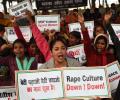
Under the exception given in Section 375 of the IPC, sexual intercourse or sexual acts by a man with his wife, the wife not being minor, is not rape.

Gyanesh Kumar, a 1988-batch Kerala Cadre IAS officer, has been appointed as the next Chief Election Commissioner (CEC) of India. Kumar, who was previously an Election Commissioner, will serve until January 26, 2029. His appointment comes amidst controversy as the Congress party demanded the government defer its decision until the Supreme Court concludes its hearing on a petition challenging the composition of the selection panel. Kumar's tenure will see him oversee several state assembly elections, including Bihar, Kerala, Puducherry, Tamil Nadu, and West Bengal.

Nariman received the Padma Bhushan in January 1991 and in 2007, he was awarded the Padma Vibhushan.

Sunday's Indian Grand Prix will go ahead as scheduled after the Supreme Court deferred hearing in a case seeking its cancellation over tax issues to next week.

Tamil Nadu's Deputy Chief Minister Udhayanidhi Stalin has reacted to Andhra Pradesh counterpart Pawan Kalyan's out-of-turn taunts with a one-liner, 'Let's wait', and thereby hangs a tale, notes N Sathiya Moorthy.

Special Public Prosecutor Amit Prasad said Khalid's mobile phone data revealed he was in contact with some actors, politicians, activists and celebrities and sent them some links by certain news portals against the Delhi Police.

The Supreme Court on Wednesday rapped the Haryana and Punjab governments over non-prosecution of violators found guilty of stubble burning and summoned the state chief secretaries to appear before it on October 23 and submit. an explanation.
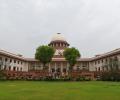
The Supreme Court on Tuesday set aside an order of the Calcutta high court in which it acquitted an accused in a sexual assault case and made 'objectionable' observations advising adolescent girls to 'control sexual urges'.
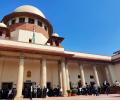
Asokan, who was present in the court, offered an unconditional apology to the bench and prayed for clemency.

Ramesh said the current limit of 50 percent is not explicitly mandated by the Constitution, but has been decided through various Supreme Court decisions.

"Are you waiting for some muhurat," the Supreme Court remarked on Tuesday as it came down heavily on the Assam government for keeping people declared as foreigners in detention centres indefinitely rather than deporting them.
